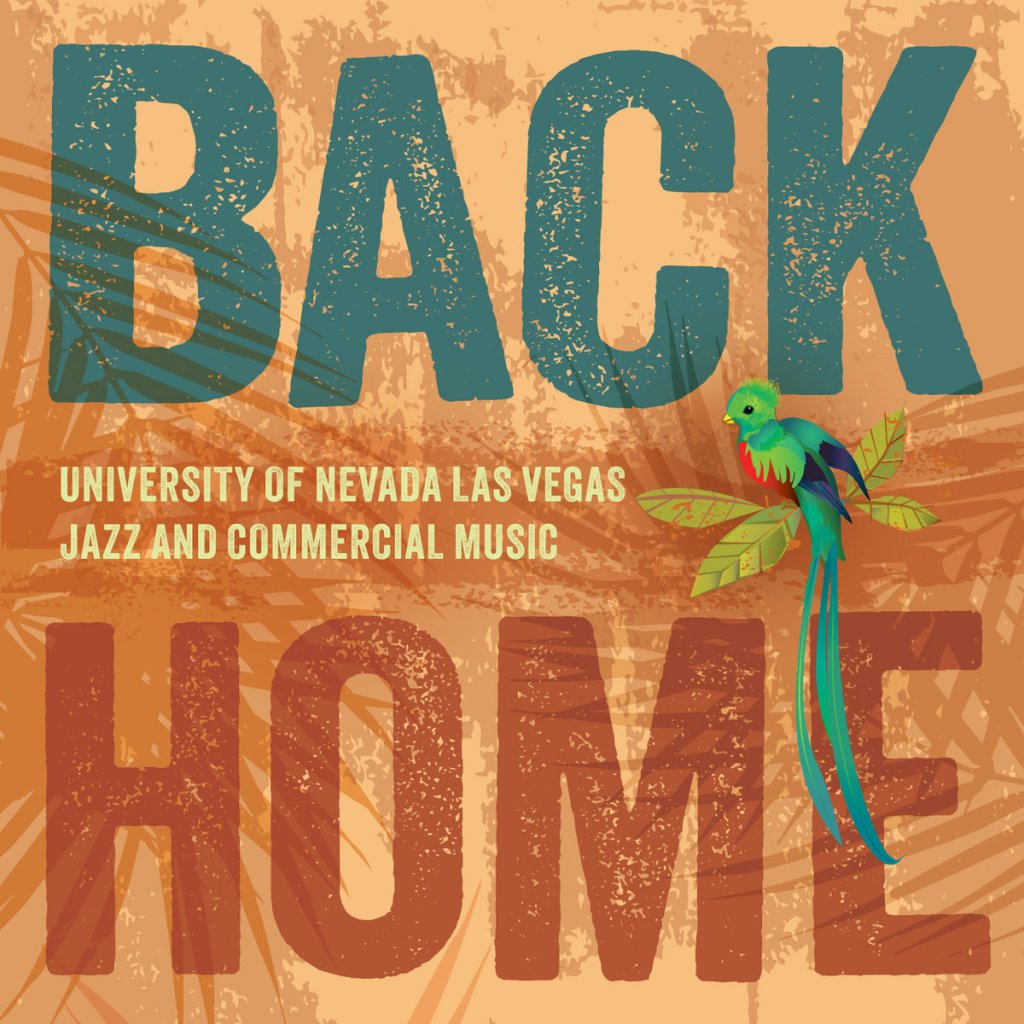
Back Home is a vibrant showcase of student talent from the University of Nevada, Las Vegas, recorded by two ensembles within the school’s Jazz and Commercial Music program: the Joe Williams Combo and the Latin Jazz Ensemble. The album leans heavily on original compositions penned by the students themselves, including the title track “Back Home,” composed by drummer Andrés Montero with lyrics by vocalist Eva Yazdanpanah. Other standout contributors include saxophonist Skyy Estanislao, who both composes and solos throughout, along with Tristan Selzler, Jason Knuckles, and Josh Alvarado, each lending original tunes to the record. Overseen by the UNLV jazz faculty under Dr. Chris Heavey and Dean Nancy Uscher, the album stands as a snapshot of the next generation of jazz musicians finding their voice.
Track-by-track:
- “Pops ‘n’ Ricky” kicks the album off with a playful swing treatment that immediately establishes a vibrant, light-footed energy. Yet beneath that breezy surface lies real intricacy — the arrangement weaves together moving parts with a deceptive ease, hinting at the technical command these young musicians bring even to their most lighthearted material.
- The title track, “Back Home,” shifts gears into warmer, more personal territory, with vocalist Eva Yazdanpanah delivering a soulful, straight-to-the-heart performance of her own lyrics. Her vocals are proof that connecting a song to an audience doesn’t always depend on volume, but sometimes on honesty and intent — a quality she achieves in spades here. It’s the emotional center of the record, where the ensemble pulls back just enough to let the voice carry the weight of the song.
- “Epifanio de los Santos Avenue” carries a real intimacy, rooted in the tender quality of the composition itself. Skyy Estanislao gives the musicians space to breathe here, and that openness lets each player’s voice come through with a quiet, personal expressiveness.
- “Never Will I Marry” gets reimagined here, moving away from its usual conversational delivery into something more internal and thoughtful. It’s as if the singer gives voice to the thoughts behind the words rather than the words themselves — an interpretation that may not win over every purist, but one that works splendidly on its own terms.
- “The Swing” is a virtuosic workout for the saxophonist, built on pure technical command. Interestingly, the solo seems to resist telling a story in any conventional sense — and that very resistance becomes the story, a kind of restless energy that refuses easy narrative resolution.
- “Abbeydance” is defined by the interplay between piano and drums, a relationship that feels like two rivers — each carving its own path, occasionally converging, occasionally splitting apart, but always feeding the same ocean. It’s one of the album’s most intriguing rhythmic conversations.
- “Sam Hose” is built around a distinct, recurring saxophone theme that revisits itself throughout the piece. Each time it returns, it’s amplified in a different way, colored and reshaped by whichever instruments happen to be sharing the space with it at that moment.
- “French Drummer” is the kind of number that pulls you in physically before you even realize it — fingers drumming along on the table, fully in the groove. It takes the listener for a ride, and that’s the real art of a drummer: making rhythm something you feel in your body, not just hear.
- “Latin Ruins” opens the Latin Jazz Ensemble’s portion of the record with a satisfying build, its repetitive opening figures laying the groundwork for a payoff once the horns land and diverge from that pattern. The effect is like a splashy, modern painting rendered in musical notes instead of pigment — vibrant, textured, and full of color.
- “Charleston” is, simply put, a song to love. At its core lies an eternal quality that speaks straight to the soul, yet the arrangement polishes every edge around that timeless heart, so the whole thing feels shiny and new rather than nostalgic for its own sake.
- “Mozo” puts Megan Wallace’s vocals front and center, and she brings a sweetness that feels refreshing — crisp, yet soothing all at once. Underneath her, the rhythm has a shuffle to it that’s hard to resist, the kind that gets your feet moving almost without permission.
- “Tierra Mestiza” conjures the feeling of South American flutes and their folk heritage, giving the piece an atmospheric, transportive vibe without pinning down anything too literal. There’s a real playfulness in the tempo and its accenting, keeping the whole thing percolating along with a light, lively energy.
- “Song for Audrey” feels rich and varied, built from a shifting array of instruments that each act as their own storyteller. Rather than one voice carrying the piece, several musical narrators take turns contributing, weaving together into one larger, cohesive story.
- “Juana la Cubana” closes the album with Megan Wallace’s voice once again at the forefront. She opens the song, setting the scene before stepping back to let the musicians fill out the bulk of the piece — only to return at the very end, wrapping everything up beautifully and bringing the record full circle.
Taken as a whole, Back Home is a remarkable testament to the depth of talent within UNLV’s Jazz and Commercial Music program. The album moves fluidly between intimacy and virtuosity, tradition and reinvention, letting both the Joe Williams Combo and the Latin Jazz Ensemble showcase their own distinct personality while still speaking the same musical language. Vocalists Eva Yazdanpanah and Megan Wallace anchor the record’s emotional high points, while the instrumentalists — on sax, piano, drums, and beyond — prove that student musicianship can carry all the nuance, risk, and storytelling of seasoned professionals. It’s an album that rewards close listening, and one that bodes well for the next generation of jazz voices coming out of Las Vegas.

